Local detail
How Local Conditions Play In
Most of the houses we work on across the service area - the stretch running from Mount Pleasant down through James Island, Hanahan, and West Ashley - went up between 1971 and 2002, with the bulk of that stock dating to the 1980s and 90s. That matters for openers more than people expect. A chain-drive unit installed when a house was built in 1986 is pushing forty years old, and the circuit board inside it was never designed to be reset twenty times a year.
The climate band here runs mild with only occasional freeze events, not the hard winters that force manufacturers to cold-rate their electronics. That's exactly why a lot of openers in this area were never fitted with cold-rated photo-eye sensors or weatherproofed logic boards - nobody specced for it because nobody needed to, until a rare cold snap fogs a sensor lens or stiffens the belt just enough to throw an error code. It's not a hurricane problem. It's a thirty-year-old plastic gear problem that shows up on the one cold morning a year.
The area
What You Pay
We don't post a flat number here because opener work splits into two very different jobs: a sensor alignment or logic board fix on an existing unit, and a full opener swap when the motor itself has given out. Age is the deciding factor more than anything else - a unit original to a house built in the 1980s or 90s is usually past the point where parts are worth sourcing.
The service area has a median household income of $96,032, which puts a battery-backup opener upgrade within reach for most homeowners here, even though plenty of people haven't gotten around to it yet. That upgrade isn't cheap compared to a basic swap, but for a house that loses the garage as its only working entry during an outage, it's the piece worth asking about before you just replace like-for-like. We'll quote the job after we've looked at what's actually failing - not before.
What we find
The Situation
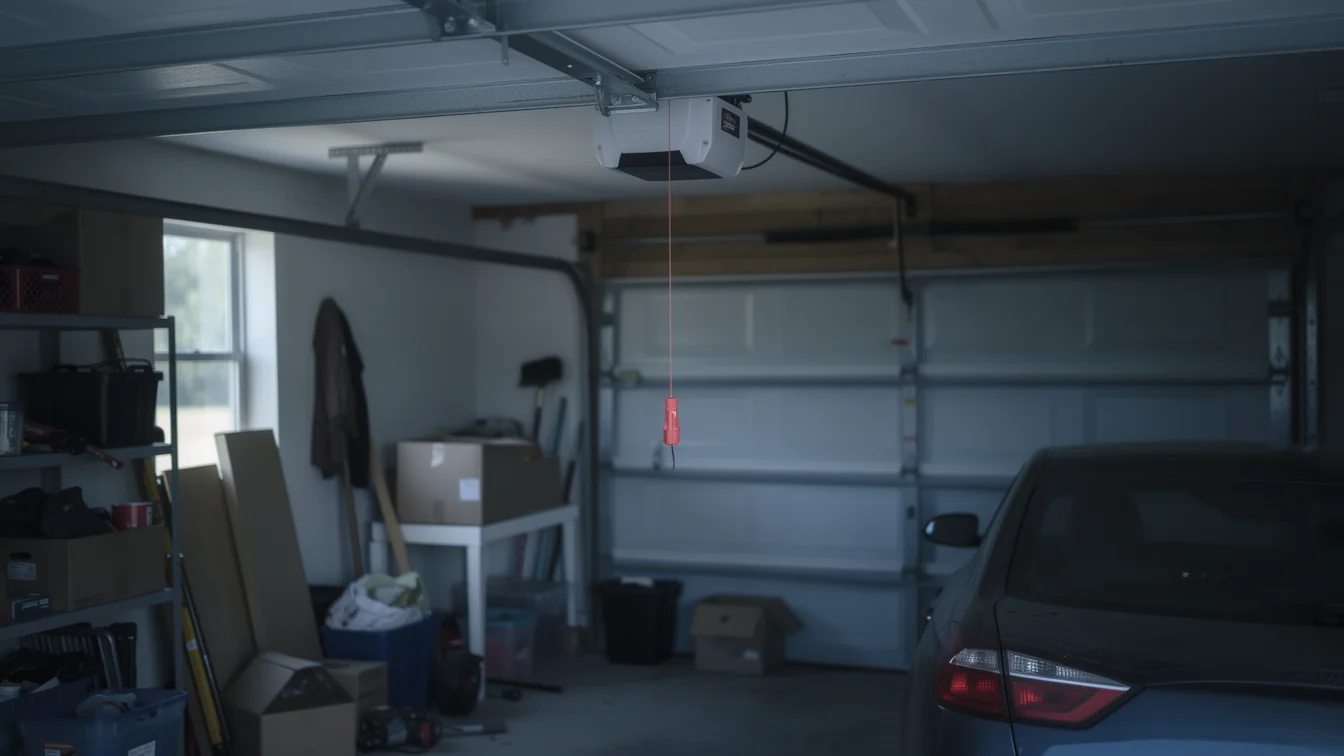
With 129,815 households in the service area and 63,826 of them owner-occupied, a stretch without grid power touches a lot of driveways at once. Most of those houses have exactly one way to get a car out if the opener loses power: the manual release cord hanging from the trolley. A surprising number of owners have never pulled it and don't know where it is until the power's already out.
Housing from the 1980s and 90s across areas like West Ashley, Ansonborough, and Harleston Village tends to run the opener off a single dedicated circuit with no battery backup wired in at all - that was standard build practice for the era, not a defect. When the power cuts, the door simply doesn't move, chain-drive or belt-drive, until someone either restores power or finds the release. It's not a wiring fault. It's just how these houses were built, and it's worth knowing before the night it actually matters.
How we work
When It Stops Being a DIY Job
Finding the manual release and pulling the door up by hand is something every owner should be able to do, and most opener manuals walk you through it. That part's fine to handle yourself.
What isn't: forcing a door that won't lift smoothly even after you've released the trolley. If the door is heavy, drags, or drops instead of staying up on its own, the springs are doing real work you can't see, and a spring under tension is not something to troubleshoot solo - that's a call, not a project. Same goes for a logic board that won't reset after a power cut returns; swapping a board on a unit that's been running since the house was built often costs more in parts and labor than it's worth, and at that point a new opener is the honest answer, not a repair.
We don't try to patch a motor that's past its service life just to avoid selling a replacement. If you're in the Charleston service area and want a straight read on whether yours is a fix or a swap, get in touch.
Talk to a local pro
Garage door trouble in Charleston?
Same-day service with honest, upfront quotes.