Local detail
How Local Conditions Play In
Charleston doesn't get the hard freeze-thaw cycle that chews through springs in colder states, but the area does sit in a mild band with occasional freeze snaps, and that's enough to matter. Steel contracts when the temperature drops, and a torsion spring that's already near the end of its cycle count loses a little flexibility right when a cold front moves through overnight. That's usually the morning you find a door that won't lift, or a loud bang from the garage around sunrise.
Most of the housing in this service area went up between 1971 and 2002, with the bulk of that stock dating to the 1980s and 90s across the thirteen named areas we work in. A spring installed when a house was built in, say, 1989 has had three decades to cycle through every cold snap the Lowcountry has thrown at it. It's not that Charleston cold is severe - it isn't - it's that a spring near the end of its life doesn't need severe cold, just one more cold morning to be the one that finally snaps.
We don't see the ice-dam or frozen-track problems that show up further north. What we do see is springs that were already fatigued from age and humidity cycling, and a cold snap finishing the job.
The area
What You Pay
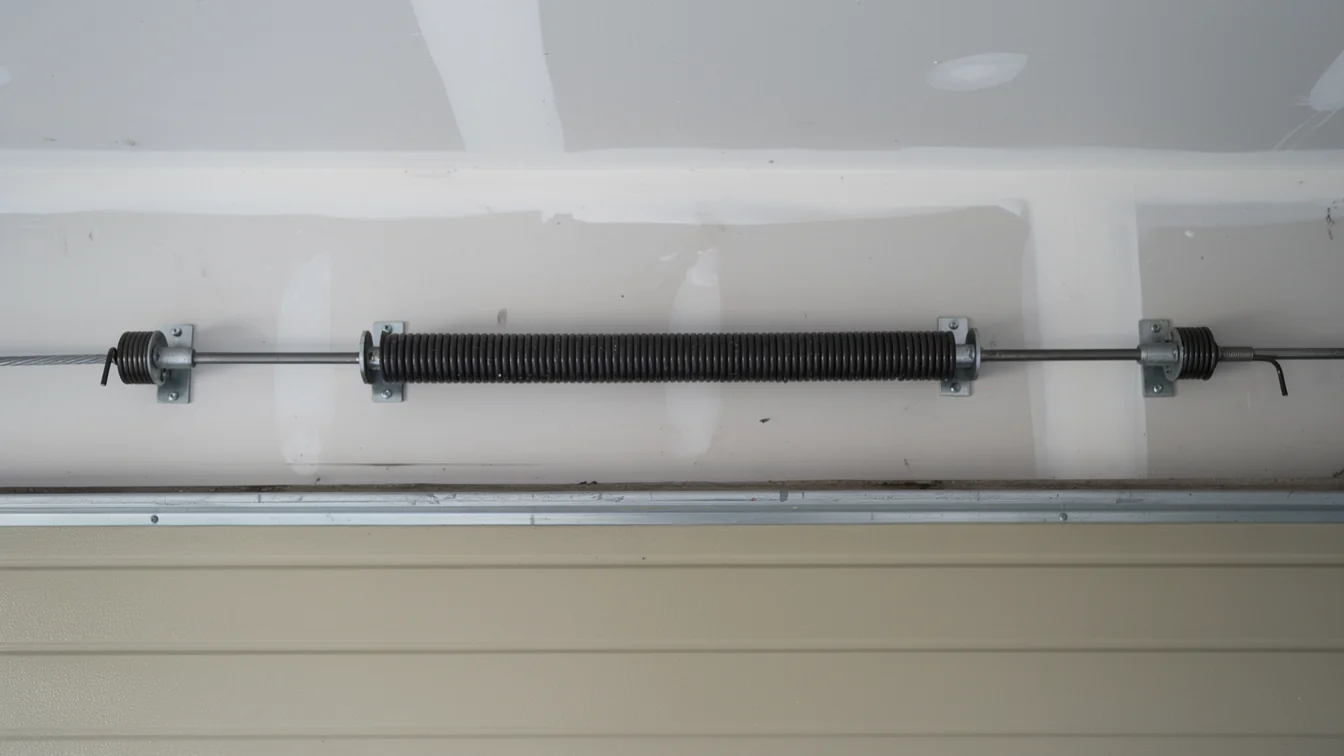
We don't have a flat number to post here, because what a spring job costs depends on the door - torsion versus extension, single spring versus a pair, standard lift versus a heavier insulated panel. A house from the 1980s-90s stock common in this area usually has a single torsion spring on a standard door, which is the simpler and more common job. A larger or newer door, or one that's been retrofitted with a heavier insulated panel, can mean two springs and more labor.
What we can tell you honestly: if your door is original to a house built anywhere in that 1971-2002 window and nobody's replaced the spring since, you're not looking at a tune-up. You're looking at a full spring swap, because a spring that old has no remaining service life worth salvaging regardless of what the weather did to it that morning.
What we find
The Situation
Here's what actually happens. A torsion spring is wound under serious tension to counterbalance the weight of the door. Cold makes the steel slightly less pliable, and a spring that's already fatigued from years of cycling - which, on housing from the 1980s and 90s, is most of them by now - is more likely to fail on that one cold stretch than on a mild week in July.
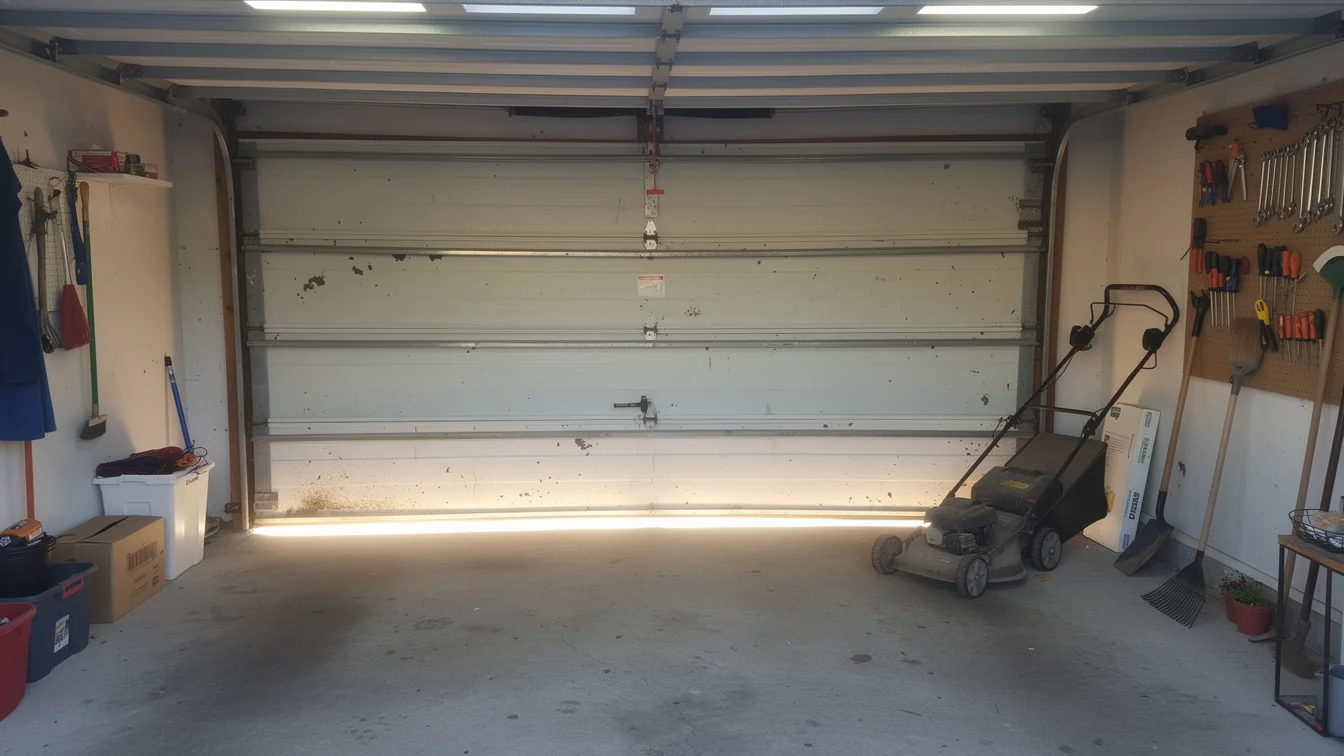
When it goes, you'll usually hear it before you see it: a loud pop, sometimes described as a gunshot, from the garage. The door itself will feel immovable, or it'll slam down hard if it was partway open. That's the spring, not the opener, not the track, and not the rollers - though a spring failure sometimes bends a cable or damages a bottom bracket on the way out, especially on an older door that hasn't had other hardware replaced along with it.
If the door was open when it happened, don't force it shut by hand. If it was down, leave it down. Either way, the opener will keep trying to do a job it physically can't do without that spring holding the weight, and that's how a $20 part turns into a $200 part.
How we work
When It Stops Being a DIY Job
A broken torsion spring is not a weekend project, and we'll say that plainly: the spring is under enough tension to cause real injury if it's wound or unwound without the right bars and a clear understanding of what you're doing. That's the honest limit here - we're not going to walk you through doing this yourself, because the people who get hurt on garage doors mostly get hurt on this exact job.
If you're in Mount Pleasant, James Island, West Ashley, or anywhere else across this service area and a spring lets go on a cold morning, the safe move is to leave the door alone and get it looked at. A single spring swap on an older torsion setup is usually a same-visit job once we're there. What takes longer is if the cold snap exposed other fatigue in the system - a cracked bottom bracket or a stretched cable - on a door that's been running on original hardware since the house was built.
Talk to a local pro
Garage door trouble in Charleston?
Same-day service with honest, upfront quotes.